

Browsing by data source
The catalog is organized by data source rather than by rule, because the question driving it is usually “we just connected Azure Key Vault, what should we be detecting?” Each data source shows how many templates it carries. Select one to see its templates.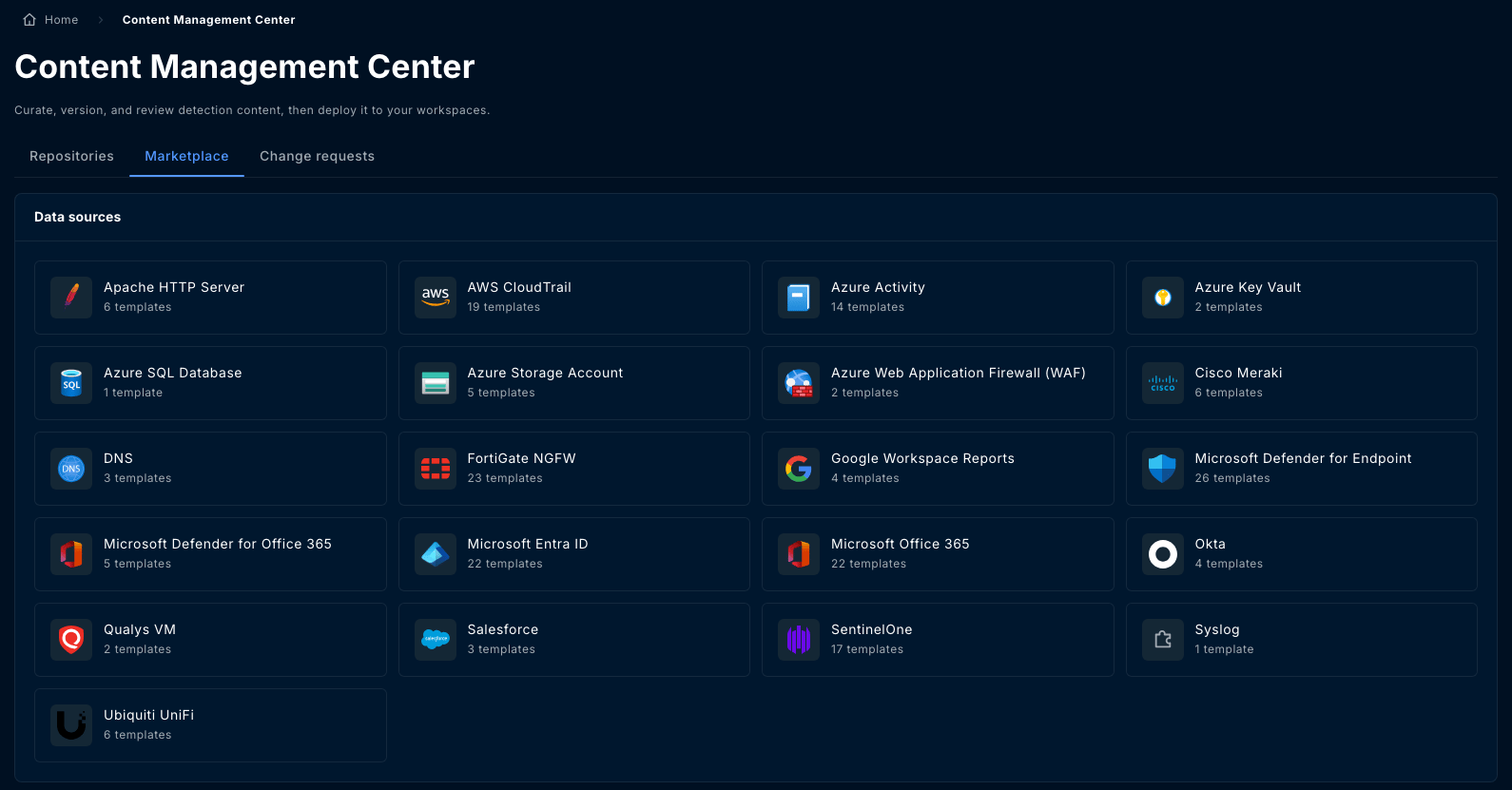
Pulling a template into a repository
1
Preview the rule
Read the query and the entity mappings. A template is a starting point, not something
to deploy unread.
2
Choose a destination repository
Select the repository the rule should land in. You need the Author permission on it.
3
Add to repository
In an unprotected repository the rule is added immediately. In a protected one it
arrives as work in progress and needs a
change request.
Templates and versions
Templates are versioned, and the catalog lists the latest version of each. Pulling takes a copy at that version.A pulled rule does not stay linked to the template. A later template version does not flow
into repositories that already pulled it, and your edits are never overwritten by a catalog
update. To take a newer template version, pull it again and compare.
Tuning before you deploy
Marketplace templates are written to be broadly correct, not tuned to any one environment. Before deploying to a customer:- Run the test query against the target workspace and confirm it returns what you expect
- Check the severity matches how the customer triages
- Check entity mappings resolve against their data
- Consider whether the rule belongs in a shared repository or as a fork for this customer
Related Guides
Rules
Test, edit, fork, and deploy a pulled template like any other rule.
Change requests
Review and merge templates pulled into a protected repository.
Repositories
Create the destination repository and choose the workspaces it covers.
Questions? Contact us at support@contraforce.com.